Zentraix
Artificial intelligence is moving from experimental laboratories into hospitals, factories, financial systems, and public services. That shift is increasing pressure on the infrastructure beneath every model. IDC’s Worldwide AI and Generative AI Spending Guide projects global AI spending will exceed $632 billion by 2028. The demand is not only for faster processors. It requires dependable servers, efficient cooling, high-speed networking, and stable software support.
The International Energy Agency’s Electricity 2024 report expects data-center electricity consumption to more than double by 2026, surpassing 1,000 terawatt-hours globally. That figure makes server design an operational issue, not merely a purchasing decision. A capable ai server manufacturing company can coordinate GPU selection, rack density, thermal management, power distribution, firmware validation, and factory testing. These details matter when a rack produces intense heat and a small configuration error can delay an entire deployment.
Evidence matters more than impressive brochures. Buyers should examine burn-in procedures, component traceability, failure-rate data, warranty terms, and documented compliance practices. They should also ask how the manufacturer handles firmware updates and replacement parts. No supplier is perfect. Some vendors may offer excellent hardware but limited regional support. Others may provide strong customization but slower delivery. This article considers why specialized manufacturing expertise can reduce those risks, while recognizing that total cost, energy availability, workload compatibility, and long-term service must remain part of the evaluation. A well-built AI server is valuable. A well-supported one is better.
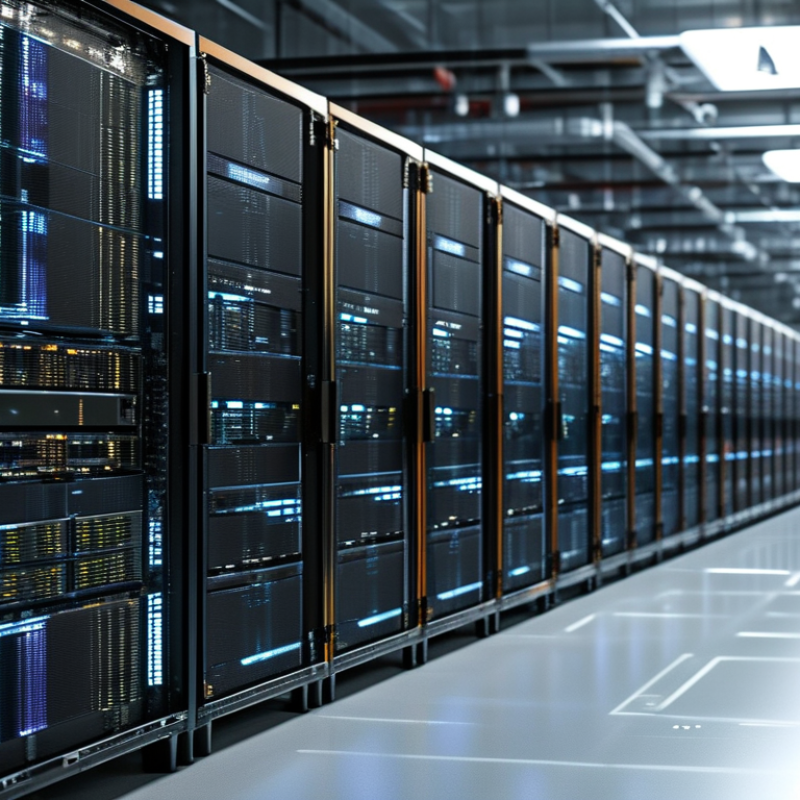
An AI server manufacturing company does more than assemble processors, memory, and storage. It designs a complete computing platform for demanding workloads. IDC reported that global AI infrastructure spending could reach 154 billion dollars in 2024, increasing 70.7% year over year. This growth raises the need for disciplined engineering, not only faster hardware.
Experienced manufacturers test thermal behavior, power delivery, firmware stability, and network performance together. A practical evaluation should examine rack airflow, liquid-cooling options, and service access. Technicians may run sustained training workloads before shipment. They should also inspect cable layouts and component temperatures. Small details matter. A loose connection can become an expensive interruption.
Manufacturing quality also affects long-term reliability. Uptime Institute’s 2024 Global Data Center Survey identified power problems and equipment failures among major outage causes. An established supplier can provide burn-in records, component traceability, failure analysis, and clear replacement procedures. These documents support accountable purchasing decisions. However, no factory is perfect. Cooling predictions can miss unusual room conditions, and early firmware may require correction. Buyers should ask for measurable test results, compatibility checks, and realistic service commitments. A polished specification sheet is not enough.
Why Choose an AI Server Manufacturing Company?
Core Technologies Behind AI Server Production
AI server production begins with balanced computing architecture, not just powerful processors. A capable manufacturer combines accelerators, high-speed memory, and fast interconnects for efficient model training. Each component must communicate with minimal delay. Otherwise, expensive computing capacity remains idle.
Thermal engineering is equally important. Dense racks can generate intense heat within minutes. Manufacturers use airflow simulation, heat pipes, or liquid cooling to maintain stable temperatures. Power systems also require careful design, with redundant supplies and real-time monitoring. Small voltage changes can damage sensitive components.
Firmware and management controllers provide another layer of reliability. They monitor temperature, fan speed, power use, and hardware faults continuously. Secure boot processes help protect the server from unauthorized software changes. Production teams should also perform burn-in tests, vibration checks, and repeated workload trials before delivery.
Details matter.
A trustworthy manufacturer records test results for every unit. It should explain failure rates, replacement procedures, and maintenance limits clearly. This reflects practical experience, not marketing language. Still, no design is perfect. Cooling performance may change with dust, room temperature, or uneven rack placement. Engineers must review field data and improve the next production cycle. Careful testing, transparent documentation, and responsive technical support make AI server manufacturing more dependable.
| Core Technology | Primary Function | Reference Technical Data | Manufacturing Requirement | Production Validation |
|---|---|---|---|---|
| Accelerator Interconnect | Moves training and inference data between accelerators, processors, and expansion devices. | PCI Express 5.0 x16 provides 32 GT/s per lane and approximately 63 GB/s theoretical bandwidth in each direction. | Requires controlled signal integrity, high-quality multilayer PCBs, precise connector assembly, and validated trace lengths. | High-speed eye-diagram testing, link-training verification, and sustained bandwidth testing. |
| High-Capacity Memory | Supplies model parameters, datasets, and intermediate workloads to the compute subsystem. | A DDR5-5600 64-bit memory channel has a theoretical peak bandwidth of 44.8 GB/s before protocol overhead. | Needs balanced memory population, accurate power delivery, thermal clearance, and firmware compatibility testing. | Memory stress tests, error detection and correction checks, temperature monitoring, and long-duration workload testing. |
| High-Speed Networking | Connects AI servers into clusters for distributed training, storage access, and workload orchestration. | A 400 GbE link has a nominal line rate of 400 Gbit/s, equivalent to 50 GB/s before encoding and protocol overhead. | Requires low-loss cabling, robust optical or electrical connections, airflow planning, and port-level qualification. | Packet-loss testing, latency measurement, throughput benchmarking, and interoperability testing. |
| NVMe Storage | Provides fast access to training datasets, checkpoints, containers, and operating-system files. | PCI Express 5.0 x4 offers approximately 15.75 GB/s theoretical bandwidth in each direction. | Requires sufficient cooling, hot-swap support where applicable, stable firmware, and protected data paths. | Sequential and random I/O tests, endurance checks, thermal throttling analysis, and power-loss recovery validation. |
| Power Delivery | Converts facility power into stable rails for processors, memory, storage, fans, and networking hardware. | 80 PLUS Titanium criteria for 230 V internal redundant supplies specify at least 90% efficiency at 10% load, 94% at 50% load, and 91% at full load. | Requires correctly sized power supplies, redundant power paths, transient protection, and accurate current monitoring. | Load-step testing, efficiency measurement, over-current protection checks, and power-failure recovery testing. |
| Thermal Management | Removes heat from high-density compute components and maintains stable performance during continuous workloads. | Air-cooled and liquid-cooled designs are both used; liquid cooling is commonly considered for high-density racks and direct-to-chip heat removal. | Requires validated cold plates or heatsinks, pump and tubing reliability, leak control, airflow zoning, and service access. | Thermal mapping, burn-in testing, leak detection where applicable, fan or pump monitoring, and performance-at-temperature testing. |
| Hardware Security | Protects firmware, boot processes, credentials, and system configuration from unauthorized modification. | Trusted Platform Module 2.0 supports hardware-based key storage and measured-boot functions. | Requires secure provisioning, controlled firmware signing, protected manufacturing access, and traceable configuration records. | Secure-boot verification, firmware integrity checks, access-control testing, and configuration audit review. |
| System Management | Enables remote monitoring, diagnostics, firmware updates, and out-of-band administration. | Redfish is a standard RESTful interface for managing server hardware through HTTPS and machine-readable data formats. | Requires consistent sensor mapping, event logging, remote recovery functions, and compatibility with data-center management tools. | API conformance checks, sensor accuracy tests, remote reboot validation, and fault-event reporting verification. |
| Factory Quality Control | Ensures that each assembled server meets electrical, mechanical, thermal, firmware, and workload requirements. | A complete production process typically combines automated optical inspection, system-level burn-in, firmware checks, and final functional testing. | Requires serialized traceability, standardized work instructions, calibrated equipment, controlled rework, and documented quality gates. | Manufacturing execution records, component traceability, burn-in reports, final inspection, and shipment-release approval. |
Note: Bandwidth figures are theoretical interface limits; actual application performance depends on protocol overhead, system architecture, workload characteristics, cooling conditions, and firmware configuration.
AI server manufacturers design systems around workload behavior, not only processor specifications. They study model size, training duration, memory access, network traffic, and expected expansion. IDC’s 2024 Worldwide AI and Generative AI Spending Guide forecasts strong AI infrastructure growth through 2028. This demand requires careful engineering, not simple component assembly.
Design teams select high-bandwidth memory, accelerator layouts, power supplies, and fast interconnects together. They also test airflow through each chassis. A practical system may use front-to-back cooling, temperature sensors, and removable fan modules. The International Energy Agency reported that data centers consumed about 460 terawatt-hours globally in 2022. It expects demand could exceed 1,000 terawatt-hours by 2026. Energy efficiency is now a design requirement.
Thermal testing happens under sustained workloads. Short benchmark results can hide throttling after several hours. Manufacturers therefore validate performance, power draw, acoustic levels, firmware stability, and remote management. They may also run repeatable tests based on industry benchmark practices. No design is perfect. A denser chassis can improve rack utilization but complicate maintenance. Liquid cooling can reduce heat stress, yet it adds installation and service requirements. Experienced manufacturers document these trade-offs and revise prototypes before production. That discipline supports more predictable deployment, clearer operating costs, and safer long-term scaling.
Quality control begins before an AI server reaches the assembly line. Engineers review thermal targets, power requirements, component compatibility, and expected workloads. Each production batch follows documented procedures with traceable inspection records. This creates accountability, not just attractive specifications.
Testing must reflect real operating conditions. Technicians run processor and accelerator workloads while monitoring temperature, power draw, fan speed, and system stability. Memory checks, storage tests, network validation, and repeated restart cycles expose hidden faults. They also inspect cable routing and connector seating by hand. Small details matter. A loose connection can appear only after hours of vibration or heat.
Reliability requires evidence over time. Manufacturers should use burn-in testing, environmental checks, and failure analysis to identify recurring weaknesses. Clear test reports help customers understand what passed, what failed, and what changed. No factory process is flawless. An overlooked airflow gap or incomplete record can still create risk. The better response is honest review, corrective action, and process improvement. Experienced teams compare test data across batches instead of trusting one successful unit. They keep repair feedback connected to design and production decisions. That practical loop supports dependable AI servers in data centers, research rooms, and demanding industrial environments.
Choosing an AI server manufacturing partner requires more than comparing processor counts. In practical evaluations, inspect thermal design, power delivery, firmware control, and validation records. A rack that looks impressive may still throttle under sustained model training. The details matter.
Energy efficiency deserves close attention. The International Energy Agency reports that data centers consumed about 415 TWh globally in 2024. This figure could approach 945 TWh by 2030, driven partly by AI workloads. Ask manufacturers for measured performance per training or inference task, not vague efficiency claims. Require test conditions, workload types, ambient temperature, and power limits. Otherwise, comparisons become unreliable.
Reliability is equally important. The Uptime Institute’s Global Data Center Survey 2024 found that more than half of respondents experienced an outage during the previous three years. Evaluate burn-in procedures, redundant power modules, remote diagnostics, spare-part availability, and response times. Request failure-rate evidence and service records. Independent benchmark results, such as MLPerf Training reports, can help verify performance, but they rarely reflect every production workload. That is a weakness worth acknowledging. A capable partner should support pilot testing, transparent change control, security updates, and documented supply-chain traceability. Ask difficult questions early. Promises are easy; repeatable evidence is harder.
Key factors for evaluating an AI server manufacturing partner. The suggested weights reflect common enterprise priorities when comparing manufacturing capabilities, deployment reliability, and long-term support.
Manufacturing quality and AI platform compatibility typically receive the highest priority because they directly affect system uptime, performance consistency, and deployment risk. Buyers should validate these factors through production records, thermal test results, integration documentation, service-level agreements, and representative customer references.
I server production?
They use airflow simulation, heat pipes, temperature sensors, or liquid cooling. Dense racks can produce intense heat within minutes. Heat builds quickly. Dust, warm rooms, and poor rack placement can still reduce cooling performance.
AI workloads can create heavy and changing power demands. Manufacturers use redundant supplies and real-time monitoring. Small voltage changes may damage sensitive components. Power design deserves more attention than it often receives.
Testing may include burn-in trials, vibration checks, thermal validation, and repeated workloads. Short benchmarks can hide performance throttling after several hours. Manufacturers should also test firmware, power draw, noise, and remote management.
Design teams study model size, training time, memory access, network traffic, and future expansion. They then select accelerator layouts, memory, power systems, and interconnects together. This approach is more practical than comparing processors alone.
Firmware monitors temperature, fan speed, power use, and hardware faults continuously. Secure boot helps prevent unauthorized software changes. Remote management can reveal problems before a technician opens the rack.
No. Liquid cooling can reduce heat stress in dense systems. However, it adds installation, inspection, and service requirements. It is effective, but not effortless.
It should record test results for every unit. Useful documents explain failure rates, replacement procedures, maintenance limits, and operating conditions. Clear records support better decisions. Marketing language alone is not enough.
Real environments expose problems that laboratory tests may miss. Dust, room temperature, uneven racks, and changing workloads can affect results. Engineers should study this data and improve later production cycles. No design is perfect.
Choosing an ai server manufacturing company can help organizations obtain computing systems designed specifically for demanding artificial intelligence workloads. These companies combine high-performance processors, accelerators, advanced memory, fast networking, efficient storage, and optimized cooling into integrated server platforms. Their expertise covers system architecture, component compatibility, power management, thermal design, and scalable configurations, enabling customers to build reliable infrastructure for training, inference, analytics, and other data-intensive applications.
A capable manufacturer should also maintain rigorous quality control throughout production. Each system should undergo component inspection, assembly verification, performance evaluation, thermal testing, stress testing, and reliability checks before delivery. When evaluating a potential partner, organizations should consider engineering experience, customization capabilities, production capacity, supply-chain management, technical support, documentation, warranty policies, and long-term maintenance services. The right partner can provide not only powerful hardware, but also stable performance, predictable deployment, flexible expansion, and dependable support as computing requirements evolve.
