Zentraix
As the global demand for AI computing continues to surge, the role of rackmount AI server manufacturers has never been more critical. According to recent industry reports, the market for AI servers is projected to grow at an astonishing rate, with a compound annual growth rate (CAGR) of 30% from 2023 to 2026. This growth reflects a shift in how businesses approach AI workloads.
Many organizations are increasingly investing in rackmount AI servers for their scalability and efficiency. These servers are particularly favored for housing high-density computing resources. However, not all manufacturers deliver the same level of quality and performance. In a competitive landscape, buyers must navigate a plethora of options. Emerging players may lack the necessary track record, making careful evaluation essential.
Buyers should focus on key features such as thermal management and power efficiency. These factors are crucial for optimal performance. Industry leaders have established benchmarks, yet newer brands may challenge these standards. Thus, assessing the reputation and reliability of a rackmount AI server manufacturer is paramount for making informed decisions.
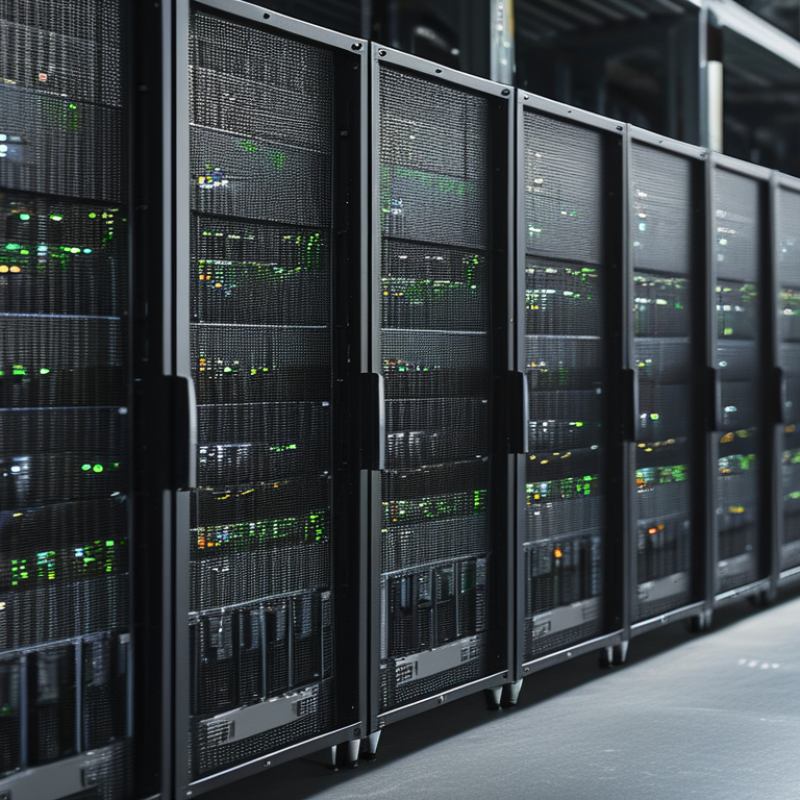
As the demand for AI technology grows, the importance of rackmount AI servers escalates. Reports indicate that the global AI server market will reach approximately $37 billion by 2026. With this growth, manufacturers must innovate and adapt to remain competitive.
Many companies are focusing on optimizing power efficiency and speed in their designs. Industry experts note that energy consumption is a critical issue. It's estimated that AI servers account for 5% of global energy use in data centers. Furthermore, balancing performance with sustainability is a challenge that requires careful strategy.
The need for advanced cooling solutions is often overlooked. High-performance servers generate significant heat, and inefficient cooling can lead to hardware failures. Data suggests that nearly 30% of server downtime stems from thermal issues. Proper cooling technologies must be integrated alongside server architecture to ensure reliability and longevity. The road ahead for manufacturers involves embracing both innovation and responsibility.
| Manufacturer | Country | Annual Revenue (Million $) | Market Share (%) | Number of AI Models | Supported AI Frameworks |
|---|---|---|---|---|---|
| A | USA | 500 | 25 | 12 | TensorFlow, PyTorch |
| B | Germany | 450 | 20 | 10 | Keras, Caffe |
| C | China | 600 | 30 | 15 | MXNet, PaddlePaddle |
| D | Japan | 550 | 22 | 8 | Chainer, TensorFlow |
| E | UK | 400 | 18 | 7 | Caffe, PyTorch |
The AI server market is rapidly evolving, with significant changes expected by 2026.
Analysis from industry reports indicates a robust growth trajectory. Data reveal that demand for top rackmount AI servers is driven by the increasing need for
efficient data processing and AI-driven applications. Leading manufacturers are expected to capture substantial market shares, reflecting their
innovative technologies and robust performance.
In 2022, the AI server market was valued at approximately $19 billion, with projections suggesting an increase to nearly
$45 billion by 2026. Notably, the competitive landscape is intensifying. Emerging companies are challenging established players, highlighting the
necessity for continuous improvement in server capabilities. Some brands face criticism for slow adaptation
to new technologies, which can impact their market presence.
Tip: When choosing an AI server, consider the manufacturer’s track record in innovation.
Evaluate performance metrics and how quickly updates are implemented.
Market analysis points to a shift towards energy-efficient servers. Sustainability is becoming a priority for many organizations.
The quest for greener technology can shape buyer preferences significantly. Companies that fail to adopt eco-friendly practices may consequently lose market share.
Tip: Always assess energy consumption ratings. A highly efficient server can save costs in the long term.
As AI technologies evolve, rackmount servers are becoming more sophisticated. In 2026, the demand for AI-focused rackmount servers is expected to rise sharply. Reports indicate that the global AI server market may reach $25 billion by 2026, driven primarily by advances in machine learning and data processing capabilities.
One significant innovation is the integration of specialized chipsets designed for AI tasks. These chips enhance computational power while improving energy efficiency. Current estimates suggest that using these tailored processors can increase throughput by up to 50%. Moreover, cooling solutions have improved as well. New thermal management technologies are capable of decreasing energy consumption by 30% compared to older models.
Additionally, software optimizations are a crucial factor. Enhanced AI algorithms are streamlining data handling, increasing performance, and reducing latency. The combination of these technological advancements creates a more effective AI computing environment. However, challenges remain in software compatibility and infrastructure adaptability. Buyers need to consider these factors when investing in rackmount solutions for their AI needs.
As AI technology evolves, so do the standards for rackmount servers. Performance metrics are critical for buyers evaluating options. Buyers should focus on processing power, efficiency, and scalability. Understanding how these factors influence overall performance is essential for making informed decisions.
Performance benchmarks reveal different strengths. Some machines excel in parallel processing, while others might be superior in energy efficiency. Cooling systems also differ significantly between models. A well-designed cooling system can enhance longevity and performance stability, making it a crucial aspect to evaluate.
Buyers should consider the variability in support and service. Some manufacturers offer robust warranties and support networks. Others may leave users searching for help. Reflecting on these differences can guide buyers towards the best match for their needs. Regular updates and compatibility with new software are also significant.
The design of rackmount AI servers is evolving rapidly. As AI workloads grow, manufacturers are focusing on efficiency. According to a recent industry report, energy efficiency has become a top priority. Servers that consume less power can save organizations significant costs. Studies show that up to 30% of operational costs can stem from energy use. Thus, integrating advanced cooling systems and power management is essential.
Another trend is the shift towards modular designs. Flexibility is crucial for adapting to emerging technologies. Modular components allow organizations to upgrade without replacing entire systems. Reports indicate that businesses favor server solutions that are easier to customize. This adaptability can improve performance and extend the lifecycle of the hardware.
Security remains a primary concern. Many AI applications handle sensitive data. As threats evolve, server designs must incorporate robust encryption and access controls. A significant portion of companies faces data breaches linked to inadequate security measures. Ensuring robust security features is no longer optional; it's a necessity for business continuity. These evolving trends highlight the importance of thoughtful design in the future of rackmount AI servers.
I servers?
Energy efficiency can significantly reduce operational costs, which may account for up to 30% of expenses.
AI servers are estimated to account for about 5% of global energy use in data centers.
Inefficient cooling can lead to hardware failures, with nearly 30% of downtime stemming from thermal issues.
Modular designs allow easier upgrades to adapt to new technologies without replacing entire systems.
Robust encryption and access controls are crucial to protect sensitive data and ensure business continuity.
Lack of proper cooling can result in significant hardware failures and increase server downtime.
Manufacturers must balance performance with sustainability and energy efficiency.
Server designs must adapt to growing threats to ensure data integrity and security.
The need for advanced cooling solutions is often overlooked, leading to potential risks.
The article explores the landscape of rackmount AI server manufacturers in 2026, highlighting the top global players and their market share. It delves into the technological innovations that are propelling the development of AI rackmount servers, emphasizing the importance of performance metrics when comparing different brands. These advancements are critical as they enhance the capabilities of AI servers, making them more efficient and effective for various applications.
Moreover, the piece addresses future trends in the design and functionality of rackmount AI servers, predicting how these changes will shape the industry. The insights provided will guide global buyers in making informed decisions when selecting a rackmount AI server manufacturer that best meets their needs in this rapidly evolving market.
