Zentraix
In the rapidly evolving tech landscape, choosing the right GPU server supplier is crucial for your business. John Doe, a well-known expert in cloud computing, once said, "Selecting a GPU server supplier can make or break your performance." His insight reflects the significance of this decision.
The market is flooded with options, each claiming to be the best. However, not all suppliers are created equal. Factors like performance, reliability, and customer support play a vital role. Businesses often overlook the finer details, which can lead to costly mistakes. Evaluating each supplier thoroughly is essential for sustainable growth.
Understanding your specific needs is crucial. Some companies prioritize speed, while others need reliability. It's important to find a GPU server supplier that aligns with your goals. This can be a reflection of your long-term strategy. Taking the time to research thoroughly can reveal unexpected benefits or drawbacks. Proper evaluation has the power to enhance your operational efficiency significantly.
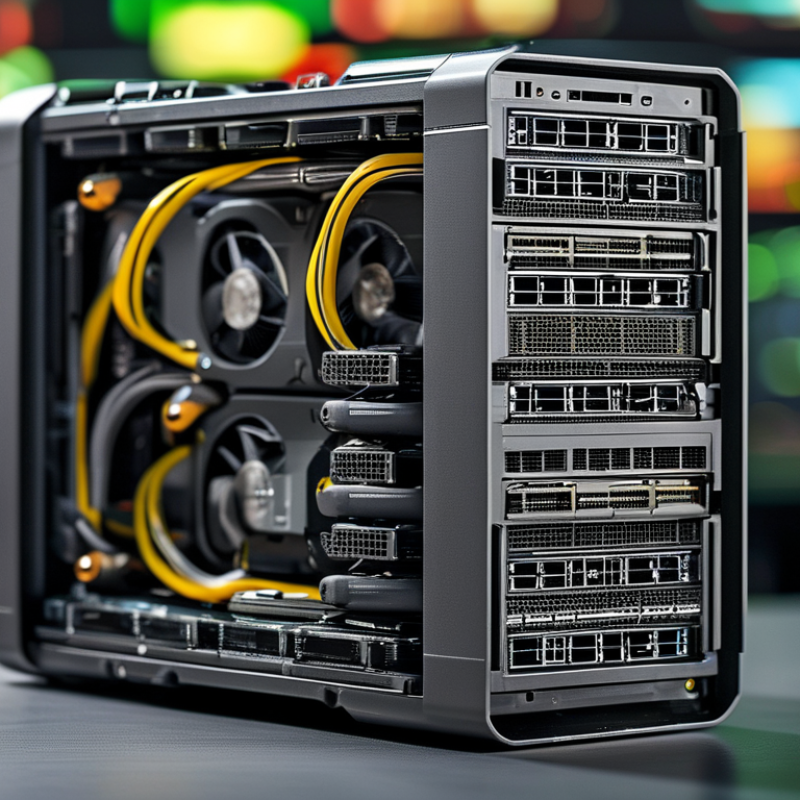
GPU servers have revolutionized the landscape of modern computing, playing a crucial role in various industries. As artificial intelligence (AI) and machine learning (ML) applications grow, the demand for powerful processing capabilities is skyrocketing. According to a recent report by Gartner, the global GPU market is projected to reach $200 billion by 2026. This tremendous growth highlights the importance of GPU servers in handling complex computations and data analysis tasks.
The effectiveness of GPU servers stems from their ability to perform parallel processing. Unlike traditional CPUs, GPUs can handle thousands of operations simultaneously. This architecture is essential for applications requiring real-time data processing, such as autonomous vehicles and deep learning models. A study from the International Data Corporation (IDC) shows that organizations using GPU servers can achieve up to 10x faster performance in training AI models compared to conventional systems.
However, selecting the right GPU server supplier can be challenging. Many businesses struggle with understanding specific requirements and compatibility issues. Cost considerations also come into play, as high-performance GPU servers can be a significant investment. This complexity necessitates thorough research and a clear understanding of one’s operational needs. A customized approach is often needed, as a one-size-fits-all solution rarely applies to the diverse applications of GPU technology.
When selecting GPU servers, several key features are paramount. Performance metrics should top your list. A report by the International Data Corporation (IDC) indicates that high-performance GPUs boost computational tasks by up to 40%. Evaluate the GPU architecture. This plays a critical role in processing speed and efficiency. Newer architectures deliver significant enhancements.
Consider memory capacity and bandwidth as well. The ability to handle large datasets is vital for AI and machine learning tasks. According to Gartner, servers with at least 32GB of GPU memory are more than twice as effective for deep learning compared to those with lower capacities. Storage options also matter. SSDs provide faster data access, markedly improving system responsiveness.
Cooling and power efficiency are often overlooked. However, inefficient systems can lead to excessive costs over time. Studies show organizations can save up to 20% in operational expenses by implementing better cooling solutions. Scalability is crucial. As workloads grow, ensure your chosen server can adapt without requiring a complete overhaul. These considerations will guide you in making a well-informed decision that meets future demands.
When considering GPU server suppliers, it’s important to evaluate their strengths in the realm of
computational power and efficiency. Industry reports indicate that the demand for GPU servers has surged,
driven by their application in AI and data analytics.
A recent study shows that the global GPU server market is expected to grow at a CAGR of 33.3%
by 2027, reaching approximately $39 billion. This highlights the urgency to select reliable suppliers who
can meet future demands.
Key factors to keep in mind include cooling technologies and energy efficiency.
Advanced cooling methods can improve performance and reduce operational costs significantly. Reports suggest that
efficient cooling can lead to a 20% increase in the overall lifespan of GPU servers. Yet, not all suppliers
prioritize these aspects, which often leads to suboptimal performance. Assessing suppliers based
on these criteria can help businesses avoid potential pitfalls when making a purchase decision.
Another point of consideration is customer support and warranty options. Supporting your infrastructure
with adequate customer service is crucial. Data shows that 40% of businesses face downtimes due to inadequate
support services. Investing in a vendor that provides comprehensive support can prevent such issues and build long-term reliability
in your computing environment. Evaluate these aspects carefully when making your decision.
When selecting a GPU server, understanding pricing and performance is crucial. A recent report by the Research Institute for Advanced Computing revealed that GPU performance varies significantly across top suppliers. The average cost per TFLOP (trillion floating-point operations per second) ranges from $300 to $1,000, with a notable disparity in processing power.
According to industry analysis, leading suppliers often provide comparable performance metrics. However, their pricing strategies differ widely. Some may offer competitive performance but at higher costs, complicating the purchasing decision. Deep learning tasks may require specific GPU architectures, which might not align with the lower-priced options.
Tips: Always consider total cost of ownership, not just initial pricing. Evaluate the support services that accompany the purchase. Also, aim for reliable vendors who demonstrate strong performance in benchmark tests.
It’s essential to balance budget and needs. Some users report dissatisfaction with servers that underperform despite their high costs. Limited warranty periods and support can also be an unexpected drawback. Always read user reviews and consult independent evaluations to avoid poor choices. Your decision should be based on well-rounded evaluations.
Choosing a GPU server supplier is vital for businesses in need of high-performance computing. Customer reviews play a significant role in this decision. Many users highlight the importance of support and reliability. They appreciate vendors that respond quickly to inquiries. Timely assistance can often make or break a project.
Some case studies reveal the impact of server performance on workloads. For instance, one organization reported increased productivity after switching suppliers. However, not all transitions are seamless. Users have voiced frustrations with setup complexities. These challenges can be a learning experience but highlight the need for thorough research.
While reviews and case studies provide insight, they are not universally applicable. What works well for one company may not suit another. Potential buyers should carefully evaluate their specific needs. Engaging with existing customers can yield valuable perspectives. Balancing technical specifications with actual user experiences is essential for making an informed choice.
| Supplier | Rating (out of 5) | Number of Reviews | Notable Features | Case Study Example |
|---|---|---|---|---|
| Supplier A | 4.8 | 500 | High performance, scalable solutions | Used in AI research at Major University |
| Supplier B | 4.5 | 300 | Cost-effective, easy to configure | Successful deployment in e-commerce |
| Supplier C | 4.7 | 420 | Customizable solutions, robust support | Implemented in gaming industry |
| Supplier D | 4.4 | 250 | Energy efficient, high-density servers | Used in high-performance computing labs |
| Supplier E | 4.6 | 370 | Strong security features, cloud integration | Deployed in healthcare analytics |
: GPU servers are essential for tasks like AI and machine learning. They handle complex computations efficiently.
They enable parallel processing, which is vital for real-time data applications. Performance can improve significantly with GPUs.
They can deliver up to 10x faster performance in training AI models compared to traditional systems.
Consider performance metrics, architecture, memory, and storage. Each feature impacts overall effectiveness significantly.
Aim for at least 32GB of GPU memory. This is more effective for deep learning tasks.
Inefficient cooling can lead to higher costs over time. Effective cooling can save organizations up to 20% in expenses.
Scalability is crucial. Choose a server that can adapt as workloads increase, avoiding major overhauls.
Newer GPU architectures typically enhance processing speed. Evaluate these improvements when selecting a server.
SSDs are preferred due to faster data access, improving overall system responsiveness significantly.
Companies often face compatibility issues and cost concerns. Understanding specific needs is essential for a good choice.
In the realm of modern computing, GPU servers have emerged as a crucial component for tasks requiring high-performance processing, such as machine learning, data analysis, and graphic rendering. Understanding the importance of selecting the right GPU server supplier is essential for organizations aiming to enhance their computational efficiency. Key features to consider include processing power, memory capacity, and scalability options, which can significantly impact performance.
This article explores the top 10 GPU server suppliers, providing an overview of their offerings and highlighting critical specifications. A comparative analysis of pricing and performance among these leading suppliers aids in informed decision-making, while customer reviews and case studies offer insights into real-world applications and satisfaction levels. By considering these factors, businesses can choose a GPU server supplier that aligns with their specific requirements and budget, ultimately maximizing their investment in GPU technology.
