In today’s technology-driven world, the demand for cutting-edge solutions is skyrocketing. This leads us to explore the term "high performance AI server manufacturer." These companies design and build servers specifically optimized for artificial intelligence applications. Their expertise is essential in handling vast amounts of data quickly and efficiently.
AI server manufacturers utilize advanced hardware components. This includes powerful GPUs, high-capacity RAM, and fast storage options. They focus on maximizing computational power while ensuring energy efficiency. However, not all manufacturers are equal. Some may lack the necessary experience or cutting-edge technology. Potential buyers must conduct thorough research to identify reliable, high-performance AI server manufacturers.
Reliability and support are crucial factors. Customers need to know they are investing in equipment that will deliver consistent results. Some manufacturers may not offer sufficient after-sales support or updates. A good balance between performance and service is vital for success in this competitive market. Understanding these intricacies helps businesses make informed choices.
Definition of High Performance AI Server
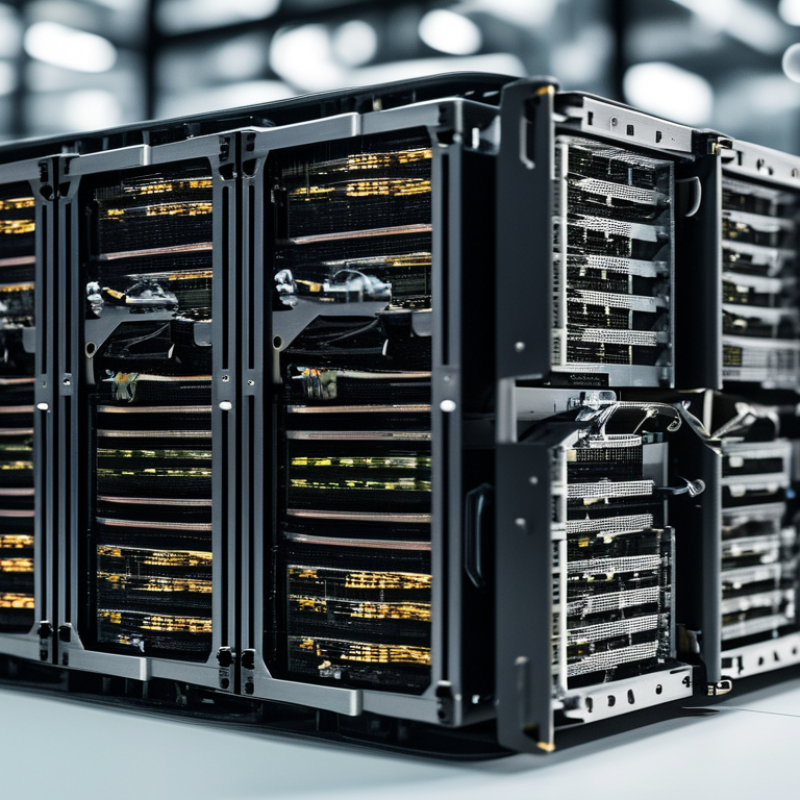
High-performance AI servers are essential tools for processing complex data and training sophisticated models. These servers boast powerful CPUs and GPUs that cater to the demands of machine learning and deep learning applications. Their architecture is tailored for tasks requiring immense computing power and memory bandwidth. This ensures efficient data handling and speed in executing algorithms.
When discussing high-performance AI servers, we must also recognize their design challenges. Balancing performance, energy consumption, and cooling solutions is vital. Excessive heat generated can lead to failures or decreased efficiency. Moreover, compatibility with various AI frameworks and software stacks is critical for productivity. Many organizations struggle to streamline these elements, often leading to suboptimal performance.
A high-performance AI server should provide a scalable architecture. Scalability allows organizations to adapt to the evolving landscape of AI technologies. However, investing in these servers involves financial and strategic considerations. Regular updates and maintenance can strain budgets, prompting businesses to carefully evaluate their long-term needs. Reflecting on these aspects provides valuable insights into making informed decisions.
Key Features of High Performance AI Servers
High-performance AI servers play a vital role in powering advanced computation tasks. These servers feature powerful CPUs and GPUs that handle extensive data processing. The ability to execute complex algorithms quickly sets them apart. Efficiency in cooling systems is also crucial.
Without effective cooling, server performance can suffer.
Another key feature is scalability. High-performance AI servers should easily adjust to increasing workloads. This flexibility is essential for growing organizations. Moreover, reliable storage solutions complement these servers. Fast access to data enhances performance, allowing seamless operation. Security measures are equally important. Protecting sensitive information must not be overlooked.
While many seek cutting-edge features, some aspects remain challenging. For instance, balancing performance and energy consumption is often difficult. Organizations frequently need to analyze trade-offs. Ensuring system compatibility and ease of integration can also present issues. Monitoring and maintenance are ongoing concerns that need attention. These elements require careful consideration when selecting a high-performance AI server.
Market Leaders in High Performance AI Server Manufacturing
The demand for high performance AI servers is on the rise. According to a recent report by MarketsandMarkets, the AI server market could reach $57 billion by 2026. Companies are seeking servers that handle complex computations efficiently. This is essential for machine learning and deep learning applications.
Market leaders are investing heavily in specialized hardware. These servers include GPUs and TPUs designed to accelerate AI tasks. A report from Gartner indicates that by 2024, 75% of all AI workloads will be deployed on cloud platforms. This trend highlights the need for scalable and reliable infrastructure. However, many manufacturers struggle to maintain energy efficiency while boosting performance.
Challenges remain in integrating advanced technologies. Companies often face hurdles in optimizing server management. Some solutions fall short on scalability, leading to bottlenecks. A study from IDC shows that inefficient systems result in a 30% performance drop. This reality emphasizes the importance of continuous innovation. High performance AI server manufacturing is not just about speed; it's also about sustainable development.
What is a High Performance AI Server Manufacturer? - Market Leaders in High Performance AI Server Manufacturing
| Manufacturer |
Market Share (%) |
Key Features |
Price Range (USD) |
Target Industries |
| Manufacturer A |
25 |
High Scalability, Energy Efficient, Cloud Ready |
5000 - 20000 |
Healthcare, Finance |
| Manufacturer B |
20 |
AI Optimization, High Throughput, Customizable |
6000 - 25000 |
Automotive, Retail |
| Manufacturer C |
15 |
Robust Security, Fast Processing, User-friendly Interface |
7000 - 30000 |
Telecommunications, Education |
| Manufacturer D |
10 |
Low Latency, Multi-User Support, High Availability |
8000 - 28000 |
Gaming, Multimedia |
| Manufacturer E |
10 |
Integrated Analytics, Scalable Architecture, High Customizability |
9000 - 32000 |
Manufacturing, Energy |
Applications and Use Cases of High Performance AI Servers
High-performance AI servers play a vital role in various industries. They are designed to handle intensive computations, such as training machine learning models. These servers excel in speed and efficiency, significantly reducing processing times. In healthcare, for instance, they analyze vast datasets from patient records. This analysis helps in
early disease detection and personalized treatment plans.
In finance, AI servers process real-time data to detect fraudulent activities. They can analyze transactions at lightning speed, enhancing security measures. Retail also benefits from these servers, using them for
demand forecasting and customer behavior analysis. This leads to better inventory management and improved customer experiences.
However, building and maintaining such servers can be a challenge. Not all organizations have the expertise or resources needed. There may be steep learning curves when adopting new technologies. Organizations must consider potential risks involving data privacy and security. Balancing performance with ethical considerations remains crucial.
Future Trends in High Performance AI Server Technology
The future of high-performance AI server technology is exciting yet challenging. As demand for AI solutions grows, manufacturers must innovate to keep pace.
Energy efficiency is becoming paramount. Advanced cooling systems and low-power processors are key components in this evolution. Servers must not just perform; they must do so sustainably.
Another emerging trend is the rise of specialized hardware. General-purpose chips are giving way to custom-built accelerators tailored for AI workloads. These accelerators can process large datasets swiftly, helping organizations extract insights faster.
However, sourcing materials for these specialized components can be problematic. Supply chain vulnerabilities may hinder production, raising questions about resilience in the industry.
Integration of AI in server management is also on the horizon. Intelligent monitoring can optimize performance and detect failures before they occur. Still, this reliance on AI poses risks.
Over-reliance may lead to complacency, hindering human oversight. Balancing automation with human expertise will be critical as technology progresses.
FAQS
Effective cooling prevents performance degradation. Without it, servers can overheat and function poorly.
They offer scalability, allowing easy adjustments to workload demands. Flexibility is critical for growing organizations.
Reliable storage solutions provide fast data access. This enhances overall server performance and operational efficiency.
They often struggle with balancing performance and energy consumption. Integration issues can lead to system incompatibilities.
They analyze large datasets to assist in early disease detection. This can lead to personalized treatment plans for patients.
Monitoring and regular maintenance are crucial to ensure optimal performance. Neglecting these can lead to significant issues.
Not every organization has the necessary expertise or resources. There may be significant learning curves involved.
They process real-time data to improve security against fraud. Quick analysis enhances transaction safety for users.
Balancing performance with data privacy is crucial. Organizations must ensure that ethical standards are maintained.
Conclusion
A high performance AI server manufacturer specializes in creating servers optimized for artificial intelligence applications, characterized by their exceptional processing power, speed, and efficiency. These servers typically incorporate advanced features such as high-capacity GPUs, optimized cooling systems, and scalable architectures, allowing them to handle complex computations often required in machine learning and data analytics.
The market for high performance AI servers is rapidly growing, driven by their diverse applications across various industries including healthcare, finance, and autonomous systems. Future trends indicate a continued evolution in server technology, with advancements aimed at enhancing performance, reducing energy consumption, and improving integration with cloud services. As the demand for AI capabilities increases, the role of high performance AI server manufacturers will be crucial in shaping the future of technology.
 Zentraix
