 Zentraix
Zentraix
Zentraix
Choosing an edge AI server manufacturer is a practical decision, not a branding exercise. The right partner must deliver reliable computing where data is created: factory floors, retail stores, hospitals, ports, and remote energy sites. An edge server may face dust, vibration, unstable networks, and limited cooling. Those details matter.
John Roese, Global Chief Technology Officer at Dell Technologies, has said, “Edge computing is not a place; it is a strategy.” His observation frames the selection process clearly. A capable edge AI server manufacturer should offer suitable GPUs, efficient thermal design, rugged configurations, secure remote management, and long-term technical support. It should also explain performance using real workloads, not impressive benchmark numbers alone. Ask how quickly the system processes camera streams, detects defects, or responds when the connection disappears.
Look beyond the product sheet. Examine deployment experience, supply-chain reliability, firmware updates, warranty terms, and integration with your existing software. Request a pilot test in conditions that resemble the final site. Measure latency, power consumption, temperature, maintenance time, and failure recovery. Small facts reveal large weaknesses.
No manufacturer is perfect. That includes established brands. A powerful server can still fail if its software is difficult to manage. A cheaper model may create higher service costs later. This is where careful comparison becomes valuable. The best edge AI server manufacturer is not always the largest one. It is the partner that understands your environment, proves its claims, and remains accountable after installation. Expect trade-offs. Document them before signing.
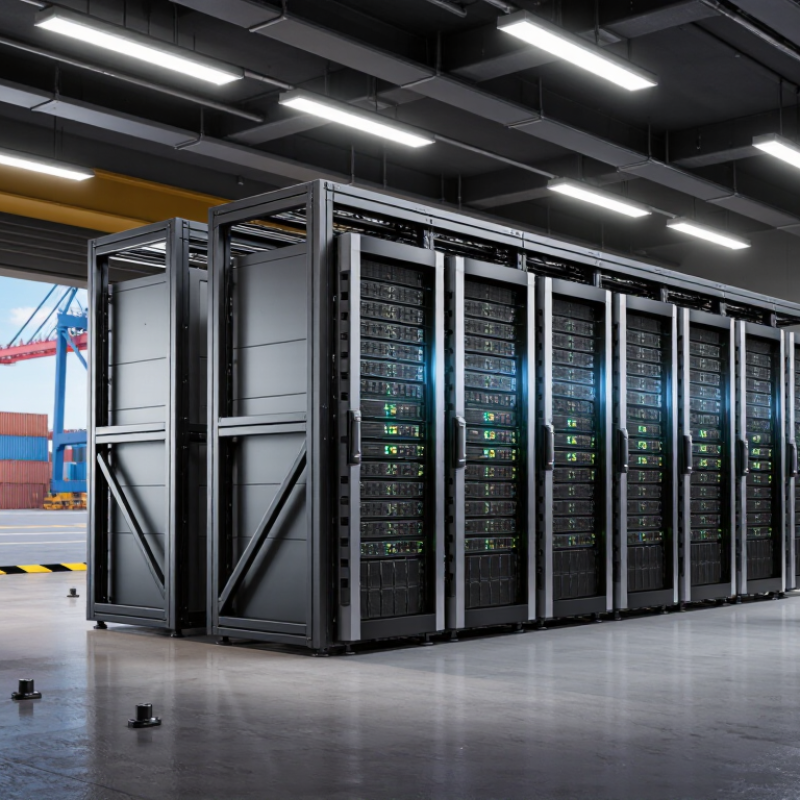
How to Choose an Edge AI Server Manufacturer?
Gartner forecast that 75% of enterprise-generated data would be created and processed at the edge by 2025. That prediction changed how companies evaluate AI infrastructure. Data now moves through factories, hospitals, stores, vehicles, and remote facilities. Sending every video frame to a central cloud can create delays, bandwidth costs, and privacy concerns.
Define your workload before comparing manufacturers. Measure camera streams, model size, response time, operating temperature, and expected user growth. A practical server should process local data quickly, even when network access is unstable. Check its GPU or accelerator performance under sustained workloads, not only advertised peak results. Cooling matters too. A dusty warehouse can expose weak thermal design within weeks.
Experience often reveals details that product sheets omit. Ask for verified test results, long-term maintenance terms, firmware update policies, and spare-part availability. Confirm support for your preferred AI frameworks and security controls. A reliable manufacturer should explain failure recovery clearly. Vague answers deserve caution.
Perfect forecasting is impossible. Your data volume may grow faster than planned. Leave expansion space. Also, avoid paying for maximum performance when your workload remains small. The right choice balances latency, reliability, power use, and lifecycle cost. A short pilot with real sensors and real workloads can reveal more than a polished demonstration.
| Evaluation Dimension | Verified Industry Data or Requirement | What to Ask the Manufacturer | Recommended Acceptance Criteria |
|---|---|---|---|
| Data Location | 75% by 2025 Gartner forecast that 75% of enterprise-generated data would be created and processed outside traditional centralized data centers or cloud environments by 2025. |
Can the server process data locally when cloud connectivity is limited, unavailable, or too expensive? | Support local inference, local storage, offline operation, and controlled synchronization with centralized systems. |
| AI Workload Type | Edge systems commonly perform real-time inference for computer vision, predictive maintenance, anomaly detection, speech processing, and sensor analytics. | Which model types, frameworks, and inference runtimes are supported? | Validate the exact production model, batch size, input resolution, and precision mode instead of relying only on theoretical accelerator performance. |
| Latency Target | Latency requirements depend on the application. Industrial control, robotics, and safety-related vision generally require tighter response times than periodic monitoring. | What end-to-end latency is measured from sensor input to AI decision and system action? | Require a documented test using the complete workload, including data capture, preprocessing, inference, postprocessing, and network transmission. |
| Performance Metric | TOPS is a theoretical throughput metric and does not by itself represent application performance. | Are benchmark results available for the intended model and precision, such as INT8 or FP16? | Compare images per second, inferences per second, latency percentile, and performance per watt using an identical model and dataset. |
| Power Budget | Power availability and cooling capacity are often constrained at remote sites, factories, retail locations, vehicles, and telecom facilities. | What is the measured power draw at idle, typical inference load, and peak load? | Keep measured peak consumption within the site power budget and document thermal performance at the highest expected ambient temperature. |
| Thermal Management | High-performance CPUs and AI accelerators generate substantial heat, while dust, vibration, and restricted airflow can reduce cooling effectiveness. | How is cooling implemented, and what operating temperature range has been tested? | Require airflow diagrams, fan-control behavior, thermal throttling data, and environmental test results for the intended installation location. |
| Memory Capacity | System memory must accommodate the operating system, AI model, runtime, input buffers, application processes, and monitoring services. | Can memory be expanded, and is error-correcting memory available for continuous operation? | Size memory for the full workload with operational headroom; prefer ECC memory where data integrity and uptime are important. |
| Storage Design | Edge servers may store models, temporary video, sensor history, logs, and locally buffered data during network interruptions. | What storage types, endurance ratings, encryption features, and replacement procedures are supported? | Use industrial or enterprise-grade storage appropriate to write intensity, with health monitoring, encryption, and a documented backup or replacement process. |
| Network Connectivity | Edge deployments may require wired Ethernet, wireless connectivity, private networks, or multiple isolated interfaces. | How many network interfaces are available, and can management, production, and backup traffic be separated? | Provide sufficient bandwidth for raw data, metadata, model updates, and synchronization while preserving network segmentation. |
| Intermittent Connectivity | Remote sites can experience unstable or delayed links, making continuous cloud access unsuitable for time-sensitive workloads. | Can applications continue operating during network outages and safely resend data after reconnection? | Support store-and-forward buffering, local decision-making, retry policies, timestamp integrity, and conflict-safe synchronization. |
| Security Architecture | Edge servers are physically distributed and may be more exposed than equipment inside a controlled data center. | Are secure boot, hardware-rooted keys, disk encryption, signed firmware, and role-based access controls supported? | Require a documented secure-boot chain, encrypted storage, authenticated updates, audit logs, and a process for vulnerability remediation. |
| Remote Management | Remote monitoring reduces the need for on-site intervention and helps detect hardware, temperature, storage, and application failures. | Can administrators remotely monitor health, restart the system, update firmware, and collect diagnostic logs? | Require out-of-band or independent management where appropriate, alerting APIs, role-based permissions, and centralized fleet visibility. |
| Reliability and Availability | Edge workloads may operate continuously without immediate access to local IT support. | Which components are replaceable, and how does the system respond to fan, disk, memory, or power faults? | Evaluate watchdog functions, ECC memory, storage health monitoring, redundant power options, spare-part availability, and recovery procedures. |
| Environmental Suitability | Temperature, humidity, dust, shock, and vibration vary significantly between office, factory, outdoor, vehicle, and utility deployments. | Which environmental tests and protection ratings apply to the exact configuration? | Match documented testing to the installation environment; do not assume that a general-purpose server is suitable for harsh or outdoor locations. |
| Software Compatibility | Model portability depends on operating-system support, drivers, runtimes, container support, and accelerator libraries. | Can the manufacturer provide a stable software bill of materials and a defined driver-update policy? | Require support for the selected operating system, containers, model format, inference runtime, monitoring tools, and reproducible deployment workflows. |
| Model Update Process | AI models require controlled updates to maintain accuracy, security, and compatibility with changing data conditions. | How are model packages authenticated, tested, rolled back, and deployed across multiple sites? | Use signed packages, staged rollout, version control, health checks, rollback capability, and approval records for every production update. |
| Lifecycle and Support | Replacing edge hardware across many locations increases deployment cost and operational risk. | How long are hardware, firmware, drivers, and spare parts supported? | Require a published lifecycle policy, advance-change notices, long-term spare-part availability, clear warranty terms, and defined response times. |
| Total Cost of Ownership | Purchase price is only one part of edge AI cost; power, connectivity, installation, maintenance, downtime, and data transfer also affect total cost. | Can the manufacturer provide a five-year cost model based on the planned number of sites? | Compare acquisition, deployment, energy, support, upgrades, replacement, connectivity, and downtime costs using the same operating assumptions. |
| Validation Method | Application-level testing is more representative than comparing isolated CPU, GPU, or accelerator specifications. | Can a production-like proof of concept be completed before volume procurement? | Test the real model, sensors, cameras, data rates, ambient conditions, network interruptions, security controls, and remote-management workflow. |
Measure camera streams, model size, response time, temperature, and expected user growth. Test real workloads, not assumptions. Leave expansion space.
Local processing reduces network delays and bandwidth use. It also keeps sensitive data closer to its source. Cloud access may become unreliable.
Check sustained latency, throughput, accuracy, and power consumption. Measure results after several hours, not only during the first test. Peak numbers can mislead.
Latency measures response time for one request. Throughput measures how many requests or video streams a server handles. Batching may improve throughput but increase individual delays.
Use the planned model, input resolution, power limit, and thermal conditions. Test with real sensors inside the intended cabinet. Record median and worst-case latency.
Dusty warehouses and hot cabinets can reduce performance quickly. Test the server near its expected temperature, such as 45°C. Cooling failures are expensive.
Request certification scope, audit dates, access controls, update policies, and recovery records. Ask for redacted evidence, not attractive claims. Vague answers deserve caution.
Review authentication, least privilege, vulnerability handling, and component integrity. Request a software component list and a clear patch process. Test updates on a spare server first.
Ask about maintenance terms, spare parts, firmware updates, and overload recovery. Confirm that logs remain available during network outages. Support promises may age badly.
No benchmark is perfect. Standard tests create useful comparisons, but field conditions differ. A short pilot may reveal dust, heat, latency, and accuracy problems.
Choosing the right edge ai server manufacturer requires a structured evaluation of both technical capabilities and long-term business value. Begin by defining your workload, deployment environment, latency targets, data volume, and growth plans, especially as forecasts indicate that 75% of enterprise data may be generated and processed at the edge by 2025. Compare vendors using recognized AI benchmarks that measure latency, throughput, and accuracy, while also examining real-world performance under continuous workloads. Hardware efficiency is equally important: solutions capable of delivering up to 275 TOPS within a 15–60 watt range can support powerful inference while controlling energy and cooling costs.
Security, reliability, and compliance should be assessed against frameworks such as ISO/IEC 27001 and IEC 62443. Finally, score each manufacturer according to total cost of ownership, technical support, supply capacity, lifecycle management, and ability to deploy at scale. A strong choice should balance performance, efficiency, resilience, and service quality rather than focusing on specifications alone.
