 Zentraix
Choosing a machine learning server manufacturer is not just a matter of picking the biggest GPU count. The right system must fit the work, the data, and the facility running it. A modern training server may combine several accelerators, high-bandwidth memory, fast networking, and carefully designed cooling. Each component affects performance, cost, and day-to-day reliability. Details matter.
This guide introduces ten manufacturers worth evaluating for machine learning workloads. It considers product range, accelerator options, customization, service, and the clarity of published technical information. Buyers should also examine power requirements, rack space, upgrade paths, and support response times. A dense GPU chassis can deliver strong throughput, but it may demand substantial power and cooling. Not every workload scales.
The rankings should be treated as a practical starting point, not a universal verdict. Model size, training approach, inference volume, budget, and existing infrastructure can change which vendor makes sense. Published specifications help, but they do not replace workload testing or a review of service terms. Even a well-researched shortlist has limits: product availability and configurations can vary by region and over time. Compare current quotes, verify compatibility, and ask manufacturers for evidence that matches your intended workload. A capable server is useful only when it fits the environment around it.
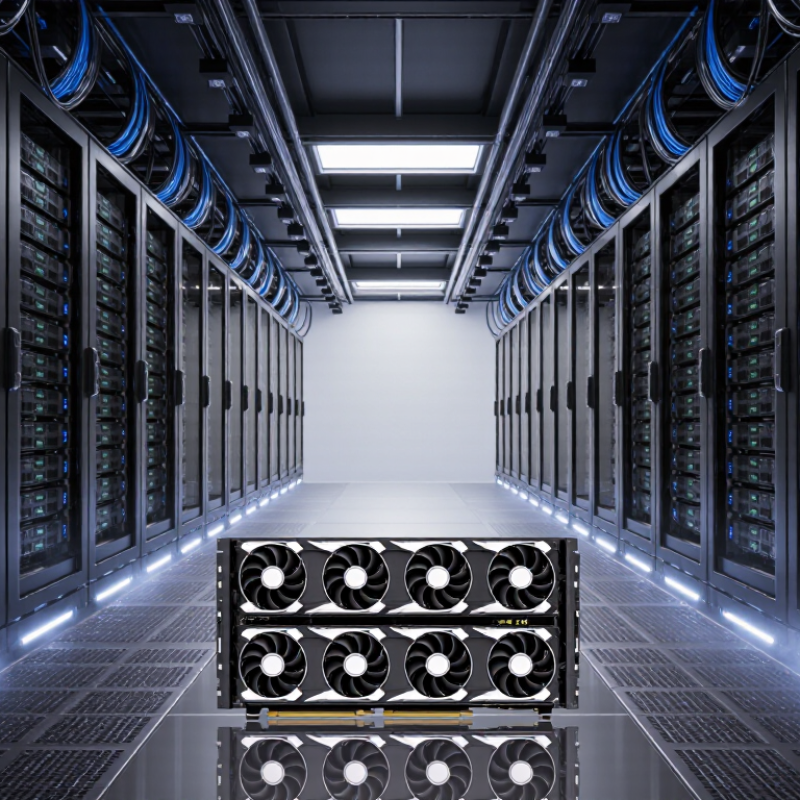
A machine learning server is built to move data through computation quickly and reliably. Its core may include multiple GPUs or other accelerators, high-bandwidth memory, fast local storage, and a low-latency network connection. The right balance depends on the workload: model training needs sustained compute and fast data feeds, while inference may prioritize response time and efficient power use. More accelerators alone do not guarantee better results.
Scale is rising. Stanford’s 2024 AI Index reports that training compute for notable AI models has doubled roughly every five months. IDC forecast worldwide AI spending would reach $632 billion by 2028, including hardware, software, and services. These figures point to growing infrastructure needs, but they do not specify one ideal server design. Cooling, power delivery, software compatibility, and serviceability matter too. A dense chassis can look impressive, yet become a poor fit if the facility cannot cool it. The boundary is not always neat.
Tips: Check memory capacity, accelerator interconnects, and measured power under your actual workload. Ask for benchmark conditions, not just peak performance. Leave room for maintenance and future upgrades. A small detail, such as airflow clearance, can change real-world performance.
Machine-learning servers are defined by their ability to support accelerator workloads, provide adequate memory and data throughput, and manage power and heat. The entries below describe ten common server design classes, not ranked or named manufacturers. Specifications are representative ranges; actual configurations vary by system.
| # | Server design class | Typical accelerator capacity | Typical system memory | Common form factor | Defining characteristics and best fit |
|---|---|---|---|---|---|
| 1 | CPU-focused data-preparation server | None to 1 accelerator | About 256 GB–2 TB | 1U or 2U | Emphasizes CPU cores, memory capacity, and storage throughput for data cleaning, feature engineering, and orchestration. |
| 2 | Compact inference server | 1–2 accelerators | About 128 GB–1 TB | 1U or 2U | Designed for lower-latency serving and moderate model workloads, often where rack space or power is limited. |
| 3 | PCIe accelerator training server | 2–4 accelerators | About 256 GB–2 TB | 2U or 4U | Uses standard expansion slots and is suited to model development, fine-tuning, and smaller distributed training jobs. |
| 4 | High-density PCIe training server | 4–8 accelerators | About 512 GB–4 TB | 4U or larger | Offers more accelerator capacity per server; requires careful attention to power delivery, airflow, and slot layout. |
| 5 | High-bandwidth accelerator platform | 4–8 tightly coupled accelerators | About 512 GB–4 TB | 4U to 8U | Prioritizes fast communication between accelerators for large-model training; may use specialized internal interconnects and liquid cooling. |
| 6 | Liquid-cooled accelerator server | 4–8 high-power accelerators | About 512 GB–4 TB | 4U or larger | Uses direct liquid cooling or another liquid-based cooling design to manage heat from dense, high-power workloads. |
| 7 | Multi-node accelerator chassis | Several nodes, each with 1–4 accelerators | Varies by node; commonly 128 GB–2 TB per node | Shared 2U–4U chassis | Combines multiple independent compute nodes in one enclosure for higher density and shared power and cooling infrastructure. |
| 8 | Storage-rich machine-learning server | 0–4 accelerators | About 256 GB–2 TB | 2U or 4U | Provides many drive bays or high-throughput storage for datasets, checkpoints, and preprocessing pipelines. |
| 9 | Rack-scale training system | Dozens of accelerators across multiple servers | Distributed across nodes | Multiple coordinated racks or a rack-integrated system | Combines compute nodes with a high-speed fabric and coordinated power and cooling for large distributed training jobs. |
| 10 | Edge machine-learning server | 0–2 accelerators | About 32 GB–512 GB | Short-depth rack, tower, or rugged enclosure | Optimized for local inference near data sources, with attention to footprint, environmental conditions, and remote management. |
Selection factors include workload type, accelerator compatibility, memory capacity, interconnect bandwidth, storage performance, power budget, cooling method, and support requirements.
It moves data through demanding computations quickly and reliably. It may combine accelerators, high-bandwidth memory, fast storage, and a low-latency network.
No. More accelerators do not guarantee better results. Data feeds, memory capacity, and interconnect speed can limit performance.
Training needs sustained compute and fast data delivery. Inference may prioritize quick responses and efficient power use. It depends.
Match memory capacity and accelerator connections to the workload. Check measured power, benchmark conditions, and software compatibility.
A dense chassis can overwhelm facility cooling. Leave airflow clearance around the rack, and check the server’s cooling requirements.
Compare workload-matched benchmarks, performance per watt, and sustained training results. A neat ranking can mislead.
Inspect repair access, spare-part lead times, firmware-update policies, and service-response terms. Small details matter.
Training compute for notable AI models has doubled roughly every five months, according to a 2024 report. Global server revenue also rose sharply in 2024, but these figures do not identify one ideal design.
Cable reach, airflow clearance, and data pipelines can affect results. Peak figures rarely tell the whole story.
A machine learning server is a purpose-built system designed to handle demanding workloads such as model training, inference, and data processing. This overview explains the features that matter when evaluating these systems, including processor and accelerator capability, memory capacity, storage performance, networking, scalability, energy efficiency, and support. It also outlines a practical way to compare manufacturers by looking at product range, reliability, configuration flexibility, service, and suitability for different computing environments.
Rather than treating a ranking as a one-size-fits-all verdict, the discussion considers how ten leading machine learning server manufacturers can be assessed against consistent criteria. The right choice depends on the workload: large-scale training may require different resources from low-latency inference or general research. By matching technical requirements, budget, deployment plans, and support needs, organizations can identify a machine learning server manufacturer whose systems are a strong fit for their goals.
